Heat pump water heaters: Should you replace your gas heater?
Here’s what I wish I knew going in

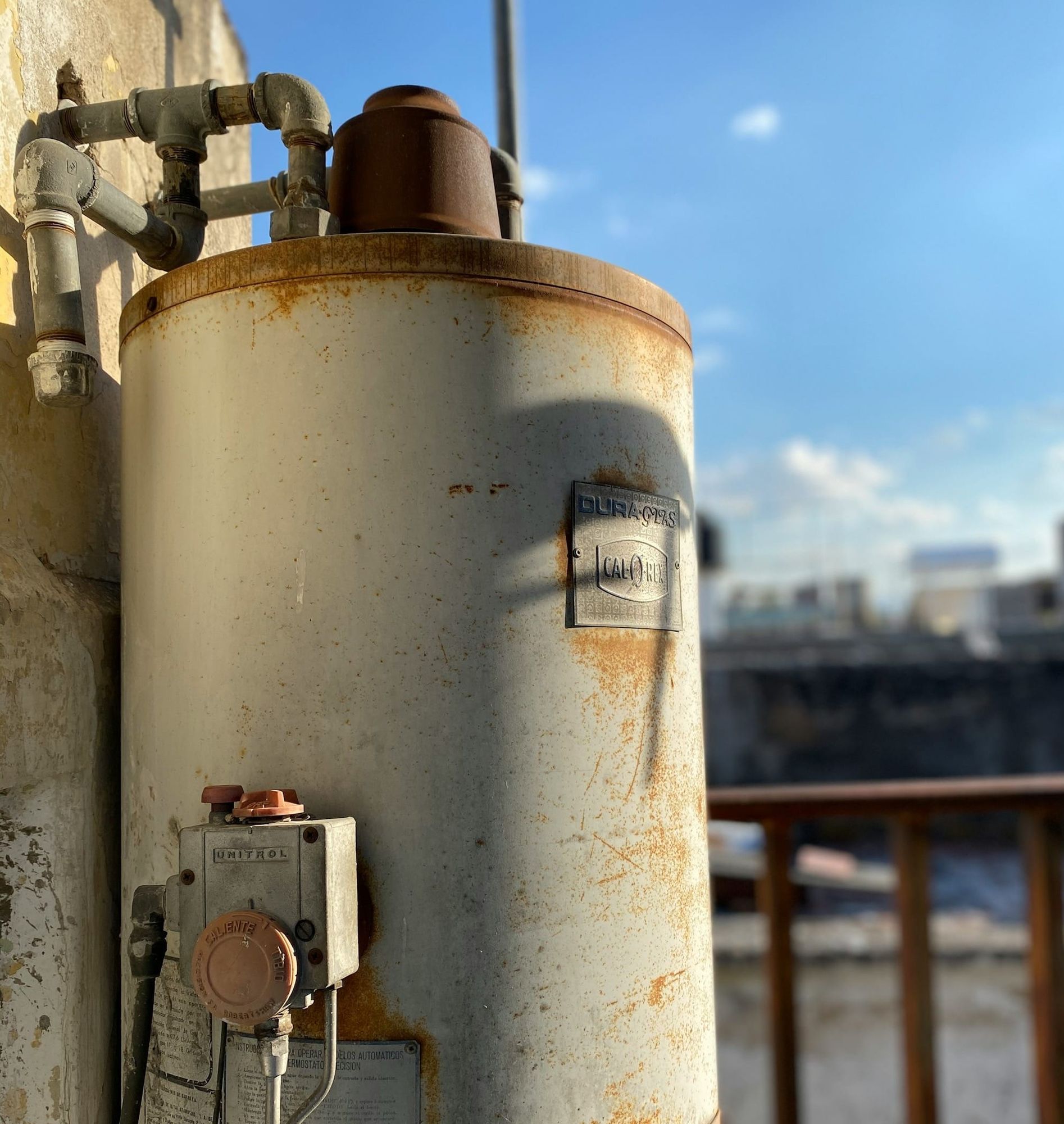
Standing in front of my dad’s aging gas water heater, I was unsure how big of a home improvement project we were taking on.
I was planning to replace it with a heat pump water heater (HPWH). A heat pump water heater is an electric water heater that runs at 3–5x the efficiency of a standard electric or gas unit — making it the most cost-effective water heating option available for most homes.
I’ve replaced gas water heaters like-for-like in the past in my home, and I know that’s a quick project that a plumber can do in a few hours – even though it’s no longer cheap. That kind of swap — same fuel, same location — is a half-day job. What I was doing was different: switching fuel sources in a 75-year-old house. That's likely a home improvement project.
But gas tank storage water heaters are terribly inefficient. Almost half the energy they use goes up the chimney and is wasted. They may not last very long. There are health concerns from gas combustion by-products and they contribute to climate change. And with solar panels already on the roof, my dad would be saving money by eliminating the cost of the gas to run it.
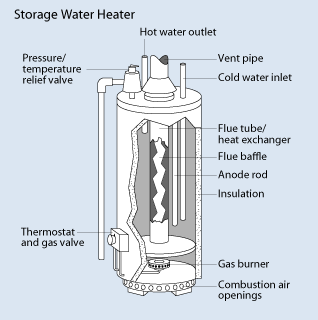
How heat pump water heaters work
Your gas water heater burns fuel to make heat, then dumps roughly 30–40% of it through a hole in the center of the tank and straight out the flue. That's not a bug — it's just how simple combustion works. You're paying for energy you never use.
A heat pump water heater does something fundamentally different: it moves heat instead of making it. It pulls warmth from the surrounding air and transfers it into the tank — the same physics as your refrigerator, running in reverse. That's why efficiency ratings of 300–400% are possible. Put in 1 unit of electricity, get 3–4 units of heat. Compared to a gas storage tank, you're looking at roughly 5x better efficiency.
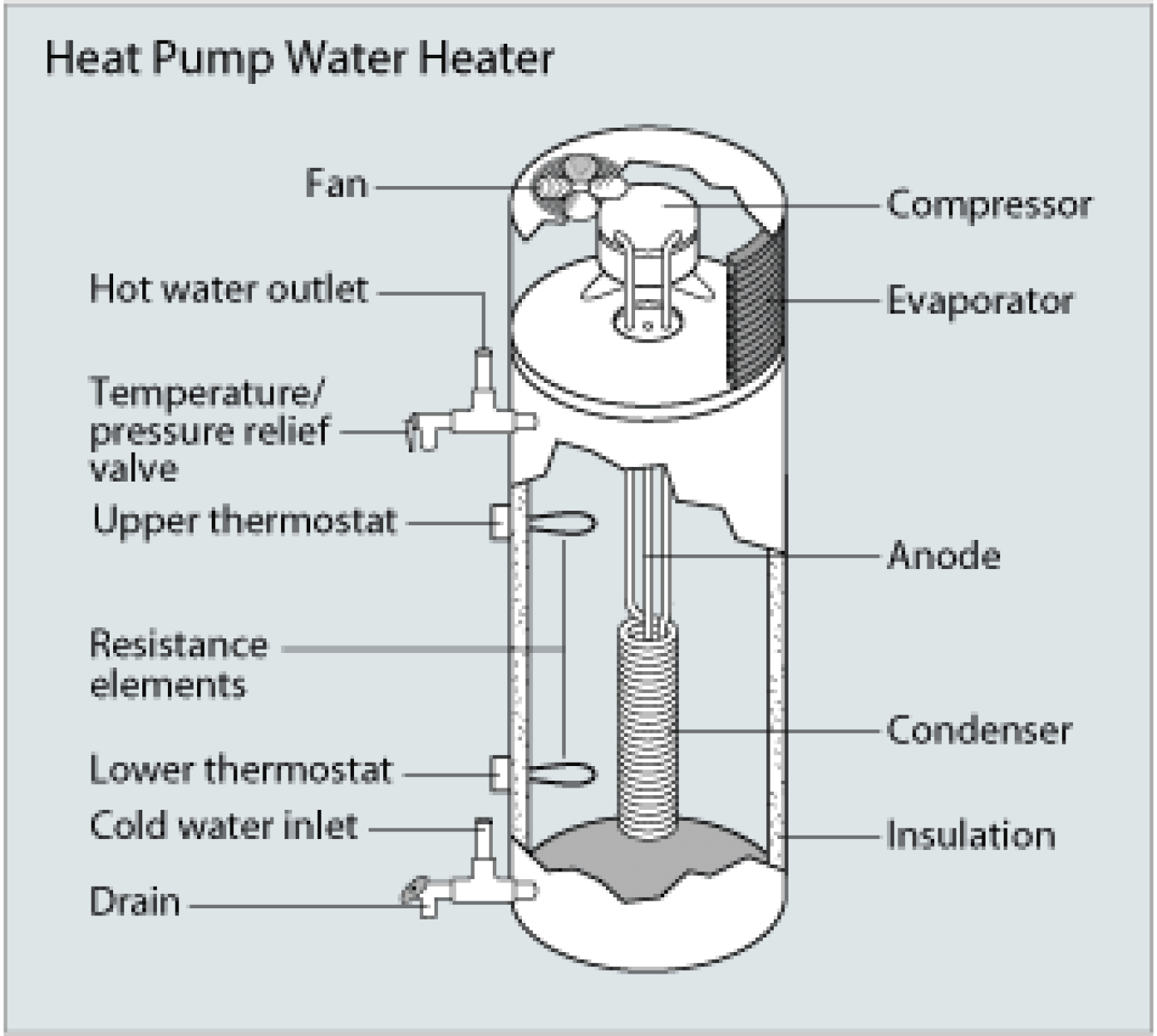
Key efficiency number: Uniform Energy Factor (UEF) - UEF
The key number to look for is the Uniform Energy Factor (UEF) — the higher, the better. Quality HPWHs land between 3.5 and 4.5, meaning they deliver 3.5 - 4.5 times as much heat energy as they use.
HPWH Operating Modes: Heat pump only, hybrid, resistance
Most units also give you three operating modes: heat pump only (most efficient, slower recovery), hybrid (heat pump with resistance backup for high-demand periods), and resistance only (fast, but expensive — essentially a standard electric heater).
Size: Number of gallons and First-Hour Rating
Will I run out of hot water with a heat pump water heater? The short answer is no, because resistance backup will kick in. But to achieve maximum efficiency many professionals recommend going up slightly in tank size from your existing gas heater, or using a heater with a mixing valve that lets you safely run the heater at a higher temperature in heat-pump-only mode. To compare models, look for the first-hour rating, which is the number of gallons a water heater can deliver in an hour starting with a full tank of hot water.
Why take this on - Is a heat pump water heater worth it?
For us, the case for switching came down to a few things that could apply to you too.
My dad's water heater was going on 8 years old — we knew a replacement was coming. Rather than wait for it to fail and make a rushed decision, we wanted to plan ahead and head off any issues. My own experience with gas water heaters hadn't inspired much confidence: the one at my house cost $1,500, lasted 6 years, and the manufacturer's warranty response was a $100 credit toward a replacement. Before that, a failed thermocouple meant days of cold showers while we waited on a warranty repair delivery. For a 70-year-old technology, the reliability record didn’t inspire much confidence.
My dad has solar, so eliminating gas for water heating meant the hot water would be effectively free on sunny days. Water heating accounts for roughly 18% of home energy use, so that's not a rounding error.
Finally, electric water heaters of any kind have no flames, fumes, or carbon monoxide risk. That matters in an older home where the gas and venting infrastructure is aging along with everything else. And many cities and states are beginning to phase out gas appliance replacements — it's worth checking what's on the horizon in your area.
The gotchas and challenges
Here’s a checklist of things I’d read about to look into with a HPWH:
Size: budget an extra foot of height
HPWHs are taller than a standard water heater — budget an extra 12 inches of vertical clearance. (Check - not an issue for us.)
Space for air exchange: small closets won’t work
These units pull heat from the surrounding air, they need room to breathe — at least 700–1,000 cubic feet. A tight closet won't cut it. (Check - our utility room was large and had an open connection with the house’s crawlspace.)
Electrical system capacity: you may need a new circuit
You may need a dedicated 240V/30A circuit. If you're replacing gas, that circuit probably doesn’t exist yet — and your panel may not have room. A good alternative solution is to use a 120V HPWH. (This was a major issue for us; see the “What Happened” section below.)
Noise: less of an issue now
Newer models are quieter than you'd expect — closer to a dehumidifier than a shop vac. Mostly a non-issue. (Check.)
It cools the room its in: a feature or a bug
A useful bonus in a warm garage. Less ideal in a small utility room you're trying to heat. (Check - not an issue for us.)
Other issues and surprises
One thing worth knowing: some electricians may flag that you need a service upgrade — upgrading the main service to your house to add capacity. It sounds alarming and expensive. In most cases, it isn't necessary. Before you agree to anything, read our story of when a service upgrade is actually required — it could save you a significant amount of money.
Is it right for your home? A decision framework
Most standard installs run $2,800–$5,500 before rebates — more in older homes that need a lot of electrical work. Factor that in as you work through this. Most households are good candidates. A few aren't. Here's the quick breakdown:
You're probably a good fit if:
- You have a basement, garage, or utility room with decent airspace (roughly the size of a large walk-in closet or bigger)
- Your existing electrical panel has room for a 240V/30A circuit — or you're planning electrical work anyway
- You're in a mild-to-warm climate, or your install space stays above 40°F year-round
- You have solar, a time-of-use electric rate plan, or just want to cut your energy bill
- Your gas or electric water heater is aging out and you're already facing a replacement
- There are substantial rebates available in your area - in some cases this can completely offset any cost differences.
To find rebates and incentives available in your area, the Rewiring America rebate finder and ENERGY STAR's rebate locator are both good starting points. Stacking national credits, state programs, local programs and utility rebates can meaningfully close the gap on upfront cost, but might take digging to find.
It might not be the right move if:
- Your only viable install space is a small closet or conditioned living area — the unit needs air and will cool whatever room it's in. There are some solutions to this with split units that put the compressor outside - but they tend to be expensive.
- You're in a very cold climate and your install space isn't insulated or heated - they still work, just not very efficiently.
- Your electrical panel is maxed out and you're not ready to take on a bigger project - but before giving up, look into 120V HPWH models that might be able to plug into an existing outlet.
The bottom line: if you have the space and the electrical capacity, there's almost no scenario where a heat pump water heater isn't the smarter long-term choice over gas storage or standard electric. The upfront cost is higher — but between rebates, lower running costs, and state and utility programs, the payback period vs electric water heater can be 3–5 years. For a switch from gas it depends greatly on the cost ratio between electricity and gas in your local area - and if you have solar.
Quick comparison - HPWH vs your other options
| Heat pump water heater (HPWH) | Gas storage | Gas tankless (on-demand) | Standard electric | |
|---|---|---|---|---|
| Unit + install cost | $2,800–$8,000 After rebates: $1,000–$5,000 |
$1,200–$3,500 | $2,700–$5,500 Gas lines + venting add cost |
$600–$3,100 Lowest upfront |
| Annual running cost | ~$150–$200/yr2–3× more efficient than resistance | ~$200–$500/yr Varies by gas rates |
~$200–$300/yr | ~$450–$600/yrMost expensive to run |
| Space needed | Most demanding700–1,000 cu ft airspace; split units can solve this | Small footprint; closet or utility room fine | Wall-mounted, compact; needs venting | Same as gas storage; closet or utility room fine |
| Electrical needs | 240V / 30A dedicated circuit; may need panel work if replacing gas; some work on 120V | None (gas-only) | 120V circuit | 240V / 30A dedicated circuit |
| Gas needs | None | Gas line | High-capacity gas line | None |
| Cold climates? | PartialNeeds ambient air above 37–40°F to run efficiently | Yes | Yes | Yes |
| Best for | Top pickGarage/basement install; solar owners; replacing aging gas or electric | Replacing an existing gas unit with no space, electrical capacity | High hot water demand; limited space; existing high-capacity gas lines | Lowest upfront cost; short-term situations |
What happened - what worked well, what we’d do differently
Old houses have a way of turning a simple swap into a home improvement project. Ours was no different - for the full story, read the case study. The water heater itself wasn't the hard part — the 75-year-old electrical infrastructure behind it was. Old, outdated panels, questionable existing wiring. If you're in an older home, assume you'll find something similar. It's not a reason to avoid the project — it's just a reason to plan for it. One thing that helped: talk to contractors with actual HPWH and electrification experience, not just general plumbers. (A good resource is https://homes.rewiringamerica.org/find-contractors). We got multiple estimates and heard very different answers about what was "required." Some of that was legitimate variation; some of it was upselling. Do your homework before you sign anything.
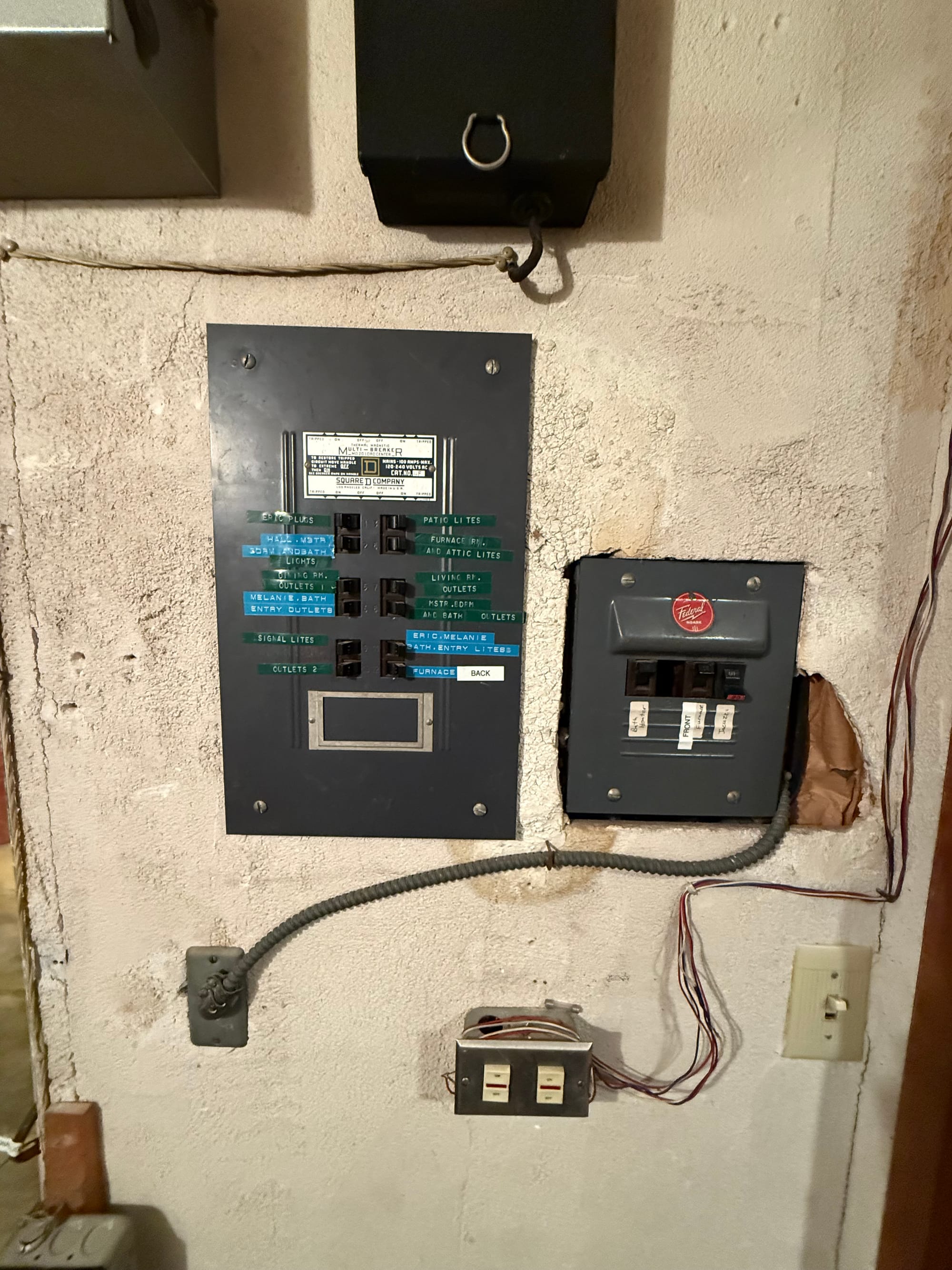
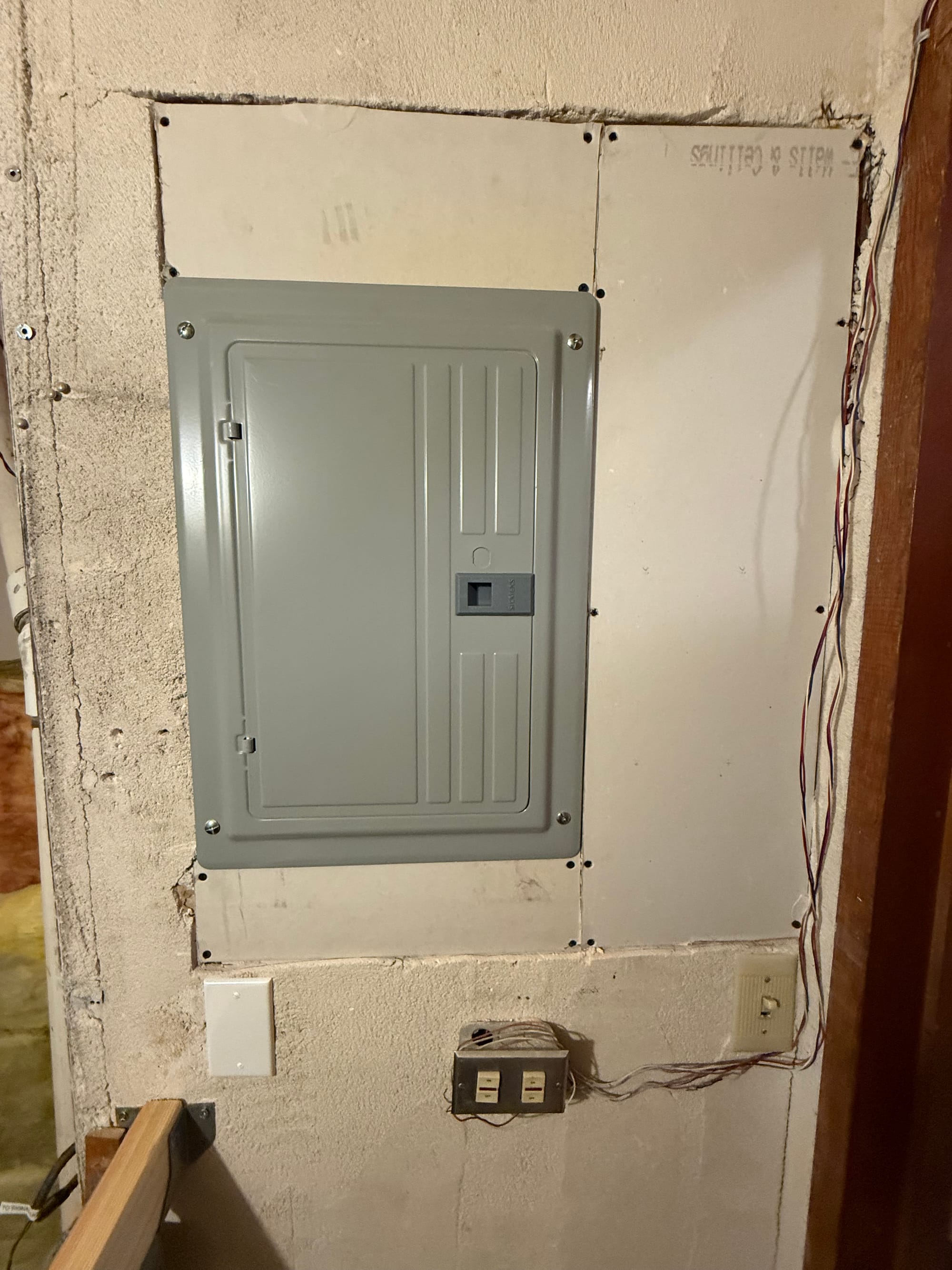
Old electric panels (left) replaced by new electric panel (right)
What worked well -
No more gas water heating — and in months with strong solar production, the hot water is effectively free. The bigger win was timing and rebates: we knew the electrical system needed upgrading regardless, so we didn't wait for the old water heater to fail and force a rushed decision. Planning ahead meant we could bundle the work, compare contractors properly, and take full advantage of rebates and incentives. Between the HPWH and electrical work we were able to stack $5,400 in rebates and a $2,000 tax credit.
What were the gotchas -
As we flagged in the checklist above, the scope of the electrical work was larger than we initially anticipated. Once we opened things up, it became clear there were more old infrastructure issues to address than the water heater project alone required. We don't regret doing it, but it required making some expensive decisions about the electrical work. Go in with the expectation that an older home will have surprises, and you won't be caught off guard.
What you should assume going in -
If you're replacing gas water heater in an older home, treat this as a home improvement project, not a repair call. Budget accordingly, start the contractor conversations early, and don't let a failed water heater make the decision for you under pressure.
Transferrable insight from my dad’s project -
A few things worth carrying into your own decision:
- If you heat water with gas, this swap will likely involve some level of home improvement work. The earlier you plan, the more control you have over cost and timing — and the better positioned you'll be to capture rebates, promos, and incentives before they change.
- If you already have an electric water heater, this is the easiest win on the list. Minimal upgrade work, immediate savings, short payback period.
- Worth exploring: 120V heat pump water heaters are now available and can sometimes be installed without any electrical upgrades at all — worth asking your contractor about this if panel capacity is a concern.
- Think holistically. If you're opening up the electrical system anyway, ask what else makes sense to do at the same time — whether that's replacing aging systems, adding circuits for an EV charger, a mini split, or future-proofing for other electrification or home improvement projects down the road.